Home Before the Huffs: Why Nat Swears by a Short, Sharp Birthday Party
There’s a moment at every children’s birthday party when the atmosphere changes. The bouncy castle starts to look less like a joy palace and more like a cage match. Somebody’s princess dress has acquired a jam handprint. A small person is lying on the floor of the village hall, not in a dramatic way, but in a ‘I have simply run out of party’ way. That, dear reader, is the moment Nat the Rat starts quietly folding the tablecloth.
Because here’s the cheerful truth: the best UK kids’ parties in 2026 don’t run until the wheels come off. They end about twenty minutes before anyone suspects the wheels were ever loose. Ninety minutes is the sweet spot — long enough for a proper squeak, short enough that everyone goes home with their personality still attached.
The Tell-Tale Signs Your Party Has Peaked
Children are terrible at saying ‘I’m overstimulated and would like to go home now.’ They’re excellent at showing it. Watch for these warning signs, ideally before they multiply.
- The cake tattoo. If the icing is being worn rather than eaten, the sugar has won. Time to move to goodbyes.
- The coat hover. Parents start drifting towards the cloakroom, holding a small cardigan like a rescue blanket. That’s not a hint. That’s a five-minute warning.
- The game collapse. Musical statues becomes musical sitting-down-and-refusing-to-stand-up. Pass the parcel turns into pass the parcel-and-complain. The rules are no longer the point.
- The yawn cluster. One yawn is nothing. Three yawns in a four-minute window means the tank is empty and the engine is running on squash.
- The door-checker. A child keeps looking at the hall door, not because they’re escaping, but because they’re done. They’ve had a lovely time. They’d like it to stop now, please.
None of this means the party was a failure. It means it was a success that has reached its natural conclusion. The trick is to notice before the conclusion becomes a group sulk.
The Ninety-Minute Run-Sheet That Actually Works
A short party isn’t a rushed party. It’s a focused one. Here’s a simple shape that keeps things moving without turning the afternoon into a military operation — although Nat does enjoy a clipboard.
0–15 minutes: Arrivals and gentle chaos. Free play, name stickers, a colouring sheet for the shy ones. This is not the time for a three-round tournament. Let them trickle in. Let the adults find the kettle.
15–35 minutes: Games with a purpose. Two or three classics, maximum. Musical bumps, a simple relay, and one game that lets the loudest child win something so they can retire happy. Keep each game under ten minutes, including the explanation, which will take longer than the game.
35–55 minutes: Food, but not a banquet. Pre-plated nibbles, a jug of water, and no expectation that anyone eats a full meal. Children at parties eat like they’re being timed. Let them.
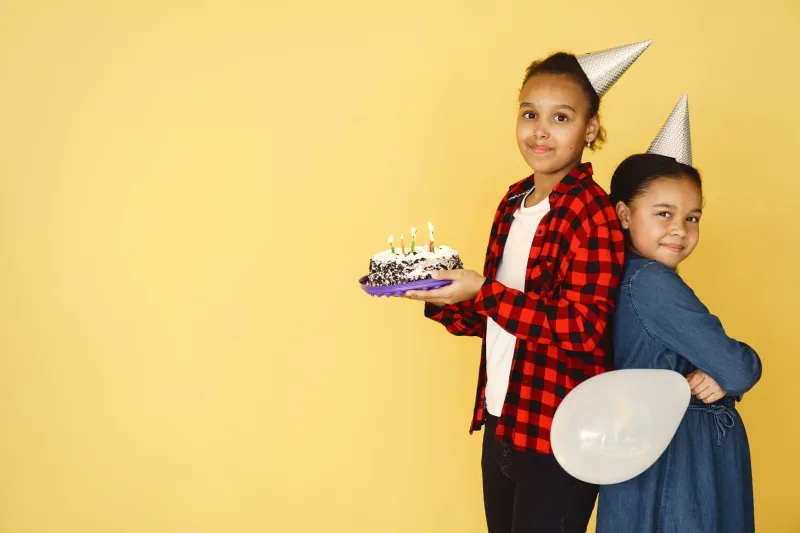
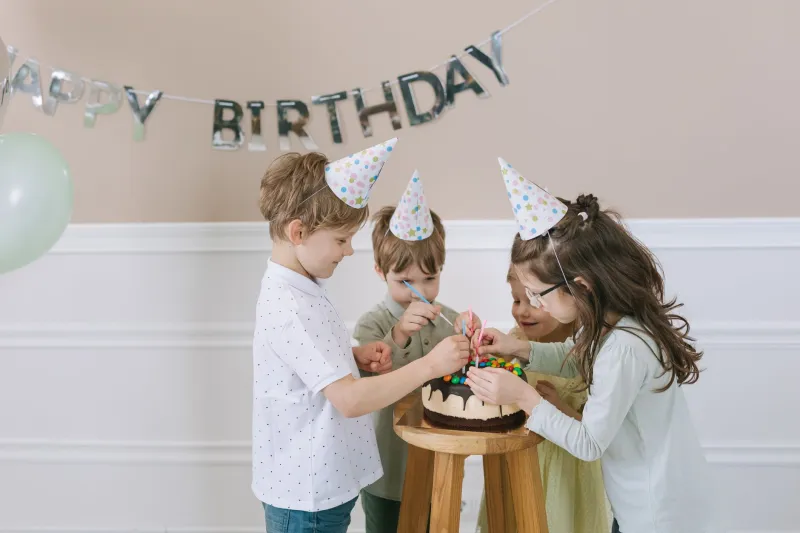
55–65 minutes: Cake and singing. The main event. Candles, a wobbly chorus of Happy Birthday, and a slice of cake that will be mostly frosting. Accept this. Move on.
65–80 minutes: One last calm activity. A craft, a story with the entertainer, or a gentle game. This is the bit that stops the cake-induced sprinting phase. If your entertainer is a character act — a giant rat, for instance — this is their golden window.
80–90 minutes: Goodbyes and party bags. Coats on, bags handed out at the door, cheerful farewells. No lingering. No second wind. No ‘just one more game’ unless you enjoy negotiating with a tiny tired lawyer.
Trimming Without Losing the Fun
Cutting a party from two hours to ninety minutes does not mean cutting the joy. It means cutting the filler you didn’t notice was filler.
- Skip the epic present-opening ceremony. Open gifts at home, or let the birthday child open one special one at the party. The rest can wait. Nobody needs to watch a six-year-old lose interest halfway through a gift bag.
- Choose games with short setups. Pass the parcel with three layers is enough. You don’t need a layer per child. You need a layer per ten minutes of attention span.
- Pre-plate the food. Buffets look generous but turn into a queue, then a scrum, then a sticky floor. Pre-plated picky bits mean everyone eats at the same time and you don’t spend forty minutes saying ‘use the tongs.’
- One entertainer, one slot. Book your character or magician for a tight thirty-minute set in the middle, not a sprawling hour that eats the cake window. Short and brilliant beats long and wobbly every time.
- Have a ‘if we’re running late’ plan. If games overrun, cut the craft. If food overruns, cut the second game. Cake and goodbyes are non-negotiable. Protect the ending.
Pickup Means Pickup
Here’s a phrase that has saved more village hall parties than any bouncy castle: ‘Collection is at 3:30pm, please.’
Not ‘from 3:30.’ Not ‘around 3:30.’ Not ‘3:30-ish, no rush.’ A specific time, written in bold on the invite, with a cheerful little note that says: ‘We’ll be packed up and heading home at 3:35, so please do come at 3:30.’
This isn’t rude. It’s kind. It gives parents permission to leave on time without feeling like they’re abandoning you to a hall full of crumbs. It also gives you a genuine end point, so the last ten minutes are goodbyes rather than a hostage situation involving a half-eaten sausage roll.
If you know a few parents will linger — and some always do — recruit a helper to hand out party bags at the door. A bag in the hand is a wonderful signal that the next stop is the car. Cheerful, firm, done.
The Squeaky Truth
A ninety-minute party is not a lesser party. It’s a party with a proper beginning, a middle that doesn’t sag, and an end that leaves everyone smiling rather than slumped. Children don’t measure fun in minutes. They measure it in moments they can remember without needing a lie-down afterwards.
So set the timer. Watch for the yawns. Call the cake. And get everyone home before the huffs arrive. Nat the Rat promises you’ll be glad you did — and the hall will be a lot easier to sweep.